

How To Repair A 2000 Zr 600 Rear Bumper
Whether someone mistakenly backed into your machine in a grocery store parking lot or that concrete pole was just a little closer than anticipated, your car's bumper is likely to take taken a bruising or 2 over the course of regular usage.
The amount of bear upon absorbed by the bumper will make up one's mind whether the bumper is repairable or non. Some bumpers volition cave-in while others will crack. Luckily, those ii types of bumper bruises are repairable in almost all cases, unless the damage is farthermost. If the bumper is subject to lots of cracks or if it is missing a lot of its material, it may be better to replace the bumper itself.
Often, you lot will have to consult with a local automobile torso shop to determine the degree of damage, and most body shops will provide a gratis repair estimate. Just before assuasive the trunk shop to actually repair your vehicle for you, there are a few piece of cake ways to fix a damaged bumper yourself using a few items that yous may already have effectually the house.
Part 1 of 2: Repair a caved-in bumper
Materials Needed
- Oestrus gun or hair dryer (generally a hair dryer is safer for this process only it may not ever exercise the chore)
- Jack
- Jack stands
- Long pry bar or crowbar
- Rubber glasses
- Work gloves
Stride 1: Heighten the vehicle and back up information technology securely with jack stands. To secure the jack stands, brand sure the jack stands are on a solid surface and utilise a jack to lower the pinch weld or inner frame of the vehicle to rest on the jack stand. Y'all can find more information on securing the jack stands hither
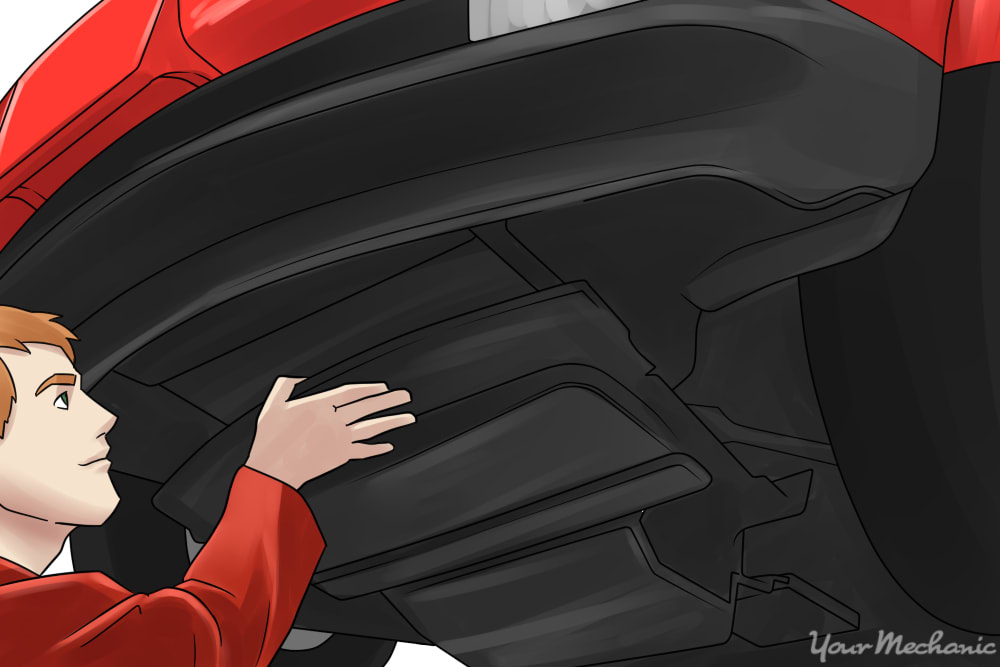
Stride 2: Remove the splash guard. If applicative, remove the splash guard underneath the vehicle or fender well baby-sit to access the rear affected expanse of the bumper. The splash guard volition exist held on past plastic clips or metal bolts.
Step 3: Warm up the damage surface area. Apply a heat gun or hair dryer to evenly warm upwardly the damaged surface area. Use the heat gun until the bumper becomes pliable. It should only take about five minutes to warm the bumper to a temperature where it becomes flexible.
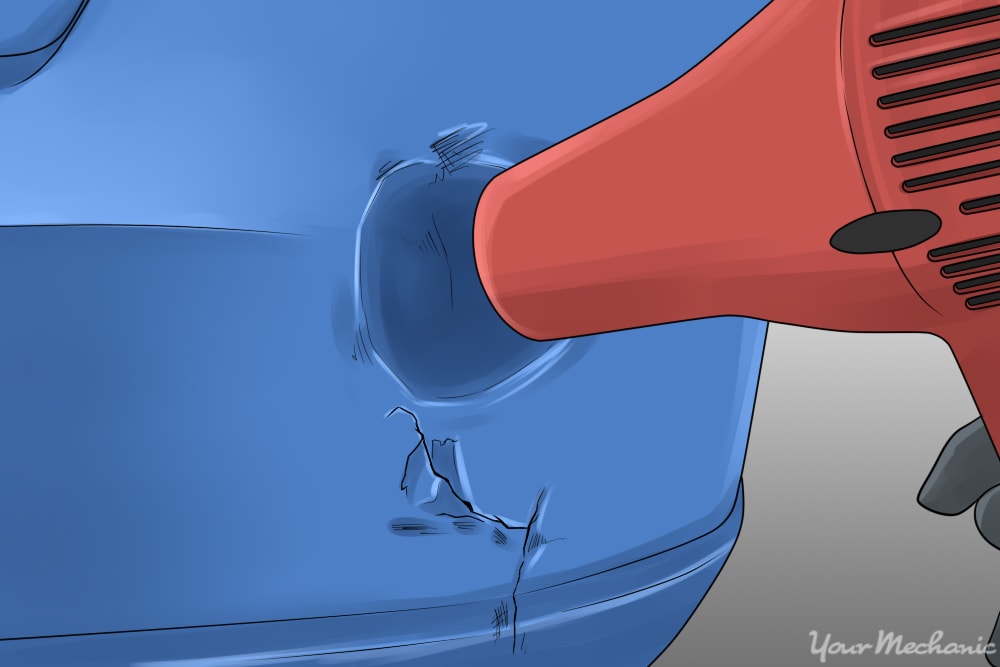
- Warning: If you are using a heat gun, exist certain to keep the heat gun at a iii to four feet distance from the bumper equally information technology reaches high temperatures that can melt paint. Using a hair dryer volition usually get the bumper warm enough to get flexible just not hot enough to melt the pigment.
Step 4: Push button out the bumper. While heating or after y'all finish heating the bumper, use the pry bar to push button the bumper from the inside out. Yous should discover the caved-in portion begin to push out equally you employ pressure with the crowbar. If the bumper is however non very flexible, warm the afflicted area until information technology becomes pliable.
-
Tip: It may be helpful to have a friend heat the bumper while you employ the pry bar.
-
Tip: Button the bumper out evenly. Button out the deepest areas offset. If one portion of the bumper is progressing to its normal shape well and the other is not, adjust the pry bar to apply more pressure to the portion that is more recessed.
Repeat this process until the bumper is back to its normal curvature.
Part 2 of 2: Repair a croaky bumper
Materials Needed
- ¼ inch burrowing tool
- Air compressor suitable for tool usage(you will only need an air compressor if yous are using air powered tools)
- Angle grinder
- Body filler such every bit Bondo
- Drill or dremel to fit burrowing tool
- Dust mask
- Jack
- Jack stands
- Masking paper or newspaper
- Pigment brush
- Paint prep cleaner or 3M wax and grease remover
- Plastic or fiberglass bumper repair kit (depending on the type of cloth used in your auto's bumper)
- Putty knife or Bondo spreader
- Sand paper (180,80, threescore grit)
-
Tape with moderate adhesion properties
-
Tip: When fiberglass bumpers cleft, they will leave fiberglass hairs visible along the edges of the cracked area. Accept a look inside the cracked area of your bumper. If you see long white hairs, it indicates that your bumper is made from fiberglass. If y'all are unsure whether your bumper is made of fiberglass or plastic, consult with a local Body Store or make a quick call to your dealer and request the bumper structure specifications.
-
Alert: Always wear a dust mask when working with fiberglass or sanding material to foreclose breathing in harmful and sometimes toxic particles.

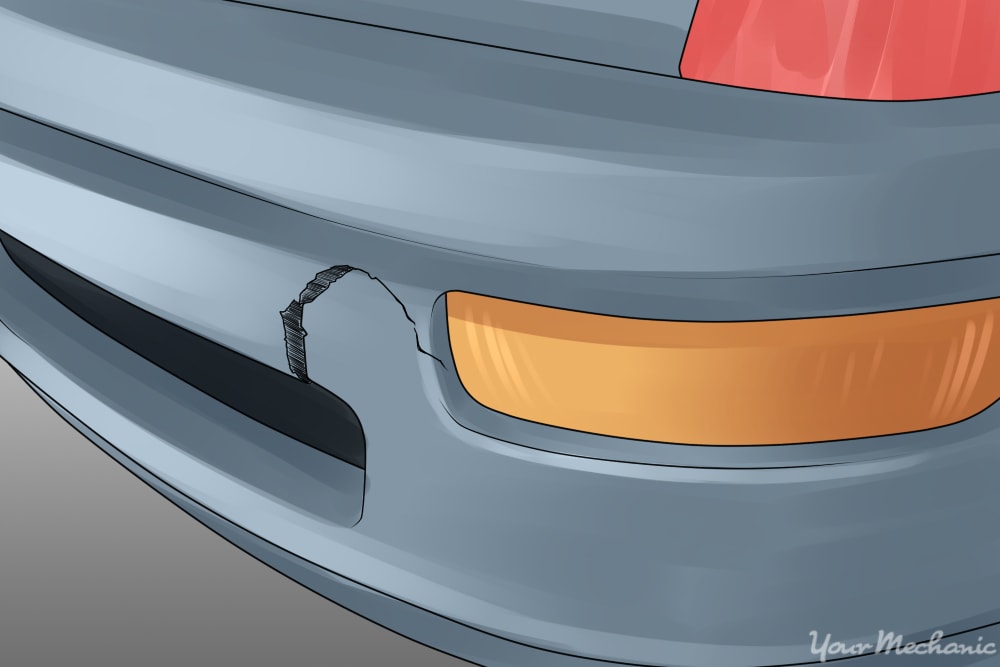
Step 1: Lift and secure the vehicle. Jack up the vehicle and secure it with jack stands.
Remove the bumper for ease of access.
Step 2: Clear the area. Clean away all dirt, grease or grime from the front and rear section of the affected surface area. The cleaned surface should extend upwardly to virtually 100 mm from the crevice.
Footstep 3: Remove excess plastic. Use the angle grinder or cut bike to remove whatsoever excess fiberglass hairs or jagged plastic. Use the angle grinder cutting wheel to straighten out the rigid edges as much as possible. Use the dremel with the burrowing tool to go to those hard to accomplish areas.
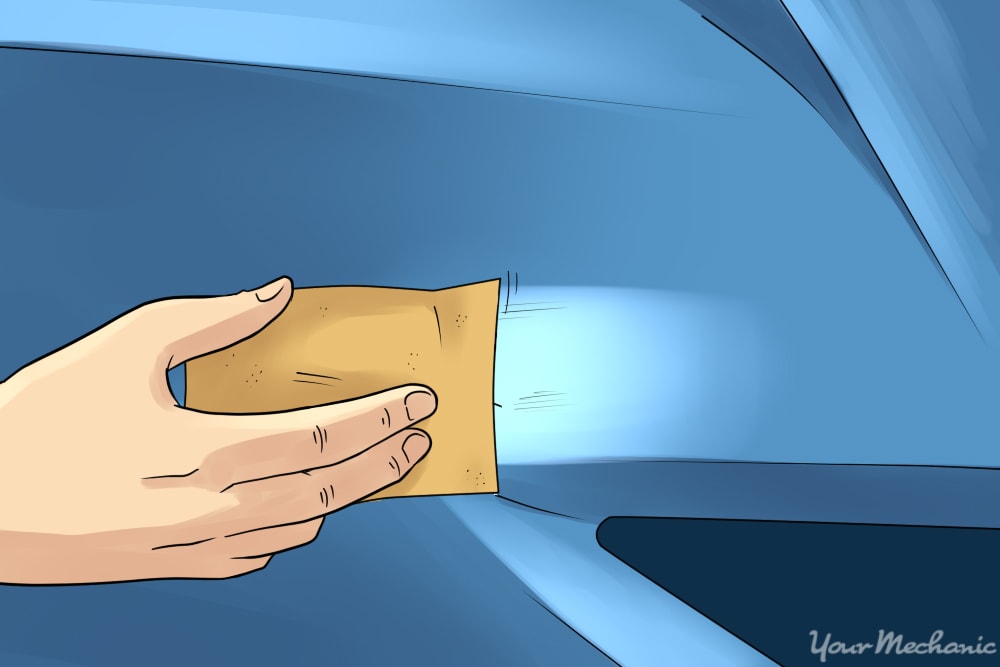
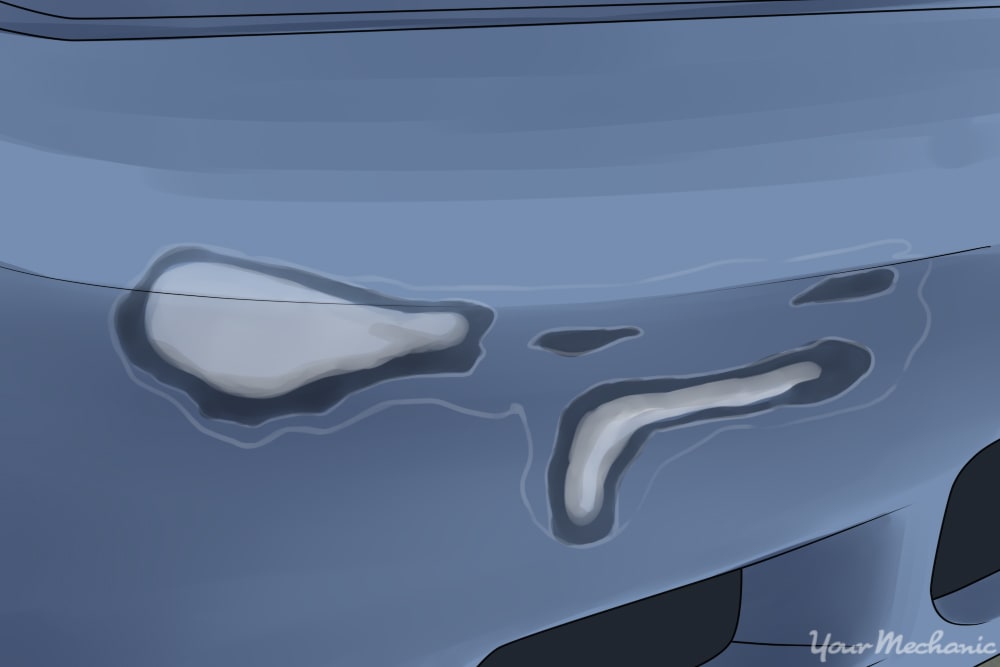
Footstep 4: Sand the damaged area with 60 grit sandpaper. Sand up to 30 millimeters around the repair surface for plastics and 100 millimeters for fiberglass bumpers.
Step v: Remove excess grit with a rag. If there is an air compressor available, use it to blow off any excess dust from the surface.
Step 6: Gear up the expanse. Clean the area with paint prep or 3M wax and grease remover.
Remove the contents from bumper repair kit.
- Annotation: If your bumper is plastic, please proceed to step xiv.
Step 7: Cut 4-6 pieces of fiberglass sheets, near 30-50 millimeters larger than the affected area.

Step viii: Mix catalyst and resin together. Mix the catalyst and resin according to the instructions given with the bumper repair product. One time mixed correctly, you should meet the colour change.
Step 9: Apply the resin. Using a paintbrush, apply the resin to the repair expanse.
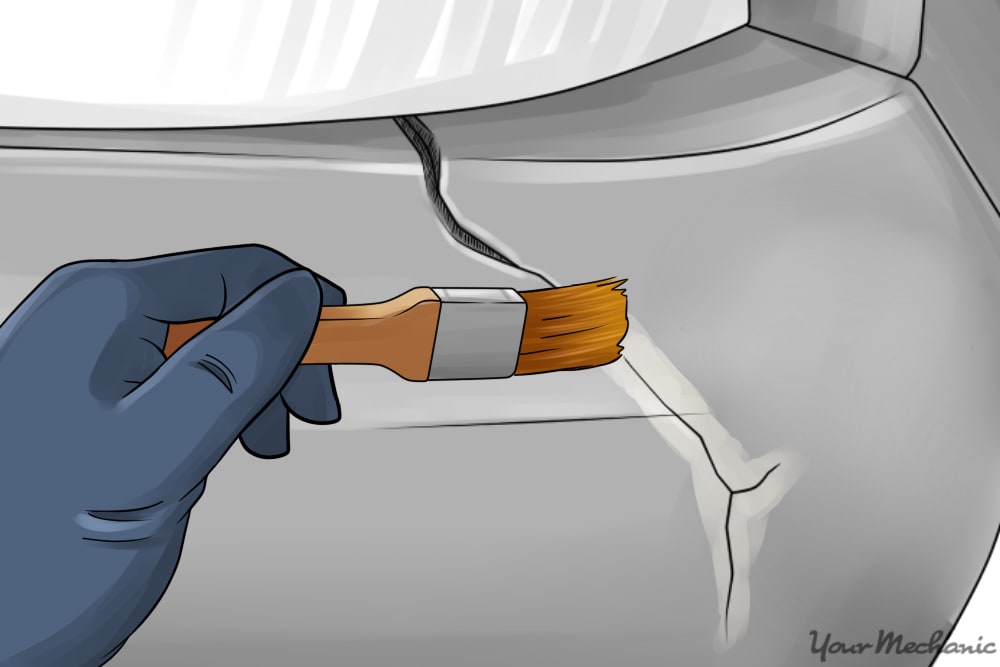
- Tip: Ensure that the entire repair area is wet with resin.
Step 10: Coat the area thoroughly. Apply layer upon layer of fiberglass sheets while supplying sufficient resin in between layers.
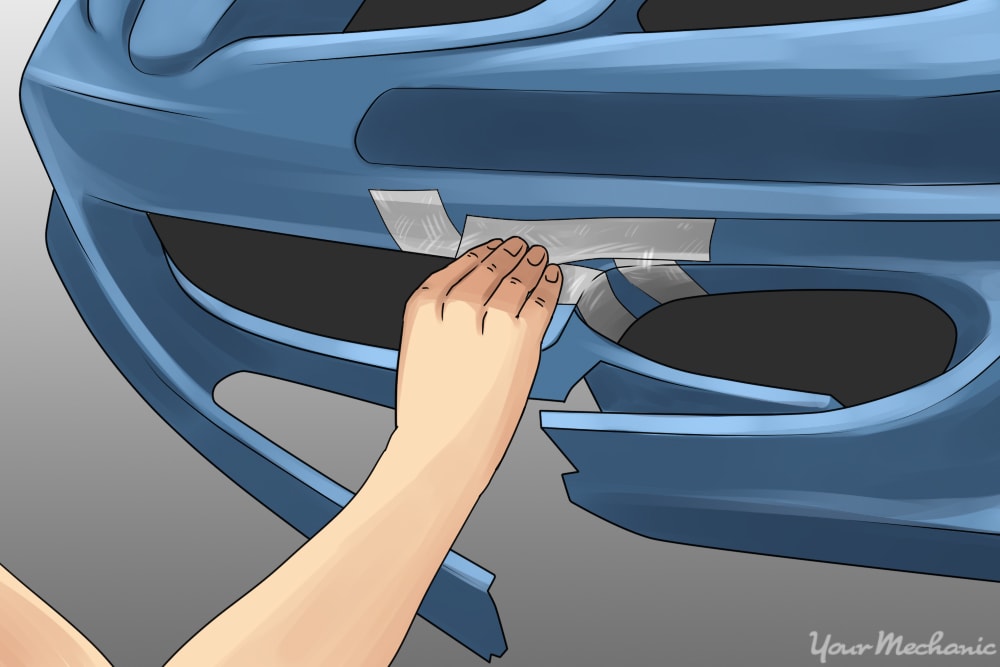
- Tip: Apply 4-v layers of fiberglass sheets. Push button out any air bubbling with the paint castor. Add together additional layers of sheets for additional forcefulness.
Let information technology dry out for 10 minutes.
Pace 11: Glaze the front area. Apply resin to the front side of the repaired area. Let information technology dry for 30 minutes.
Step 12: Sand the front of the repair area. Sand the front of the repaired surface area with 80 grit sandpaper. Sand away lumpy, uneven resin formations to match the normal polish curvature of the bumper.
Step 13: Make clean the area. Clean the repaired area with pigment prep or 3M wax and grease remover.
- Note: If your bumper is fabricated from fiberglass, you lot can proceed to apply body filler. Delight go on to footstep 17.
Pace fourteen: Mix the repair kit contents. To repair a plastic bumper, mix the contents in compliance with the instructions provided with the repair kit.
Step 15: Tape the cracked surfaces together. On the forepart side of the repair surface area, utilise the tape to pull the opposing edges of croaky surfaces together. This will add more stability during repair.
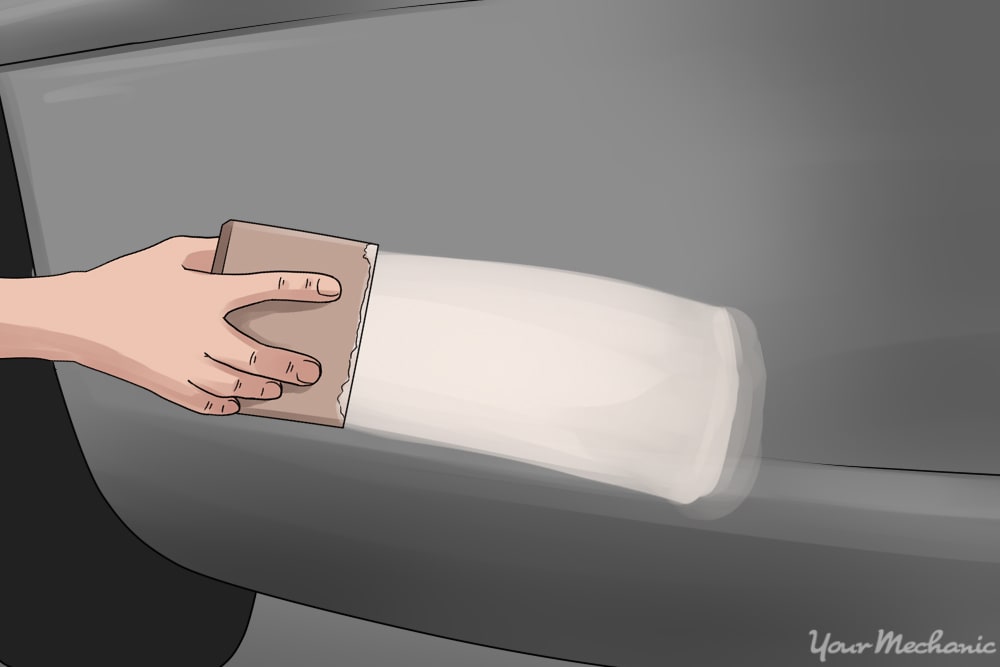
Step 16: On the rear side of the repair area, use a putty knife or Bondo spreader to employ the bumper repair product. When applying the repair product, bending the putty pocketknife so that the product is pushed through the crack and is squeezed outwards through the forepart. Ensure that y'all cover an area extending about l millimeters from the crack.

Let dry according to the time suggested by the repair kit manufacturer.
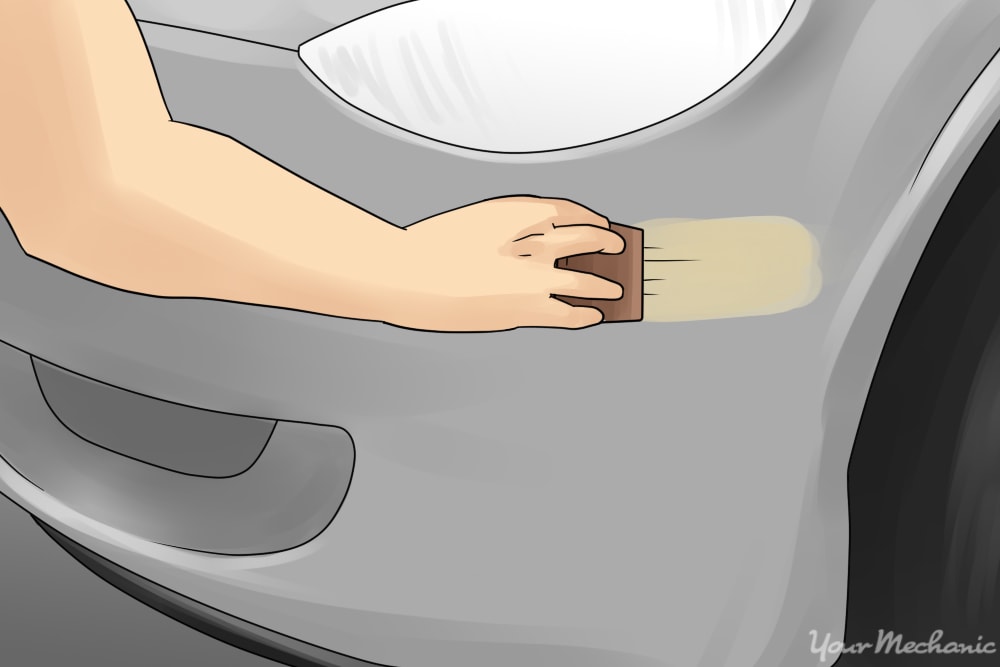
Step 17: Prepare and mix the body filler according to the packaging instructions. Utilize multiple layers of body filler with the putty pocketknife or Bondo spreader. Build the surface using 3-four wipes. Style the layers to form the shape and contour of the original bumper.
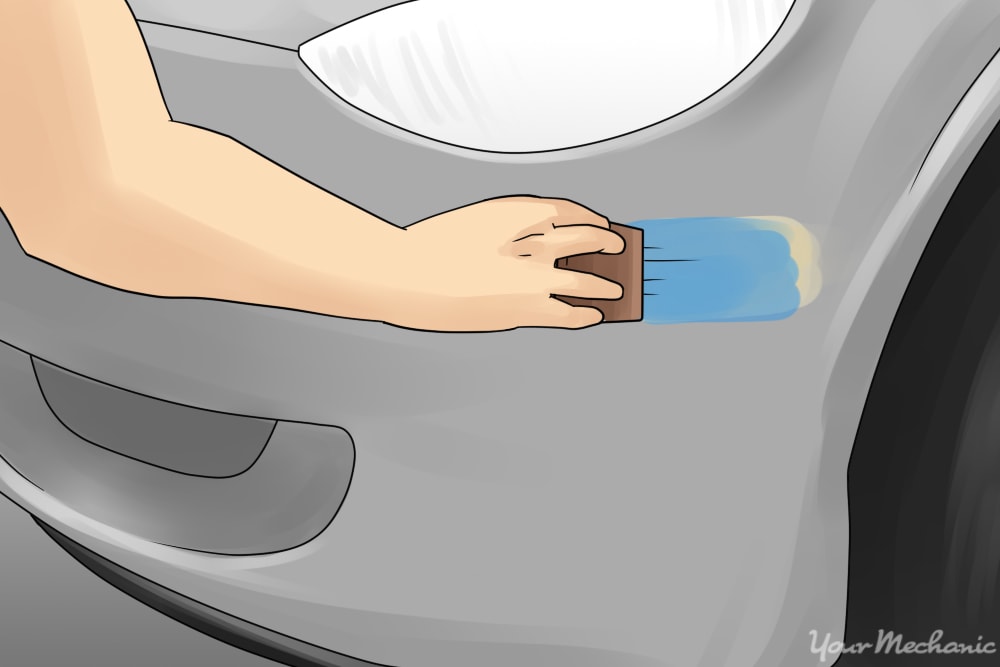
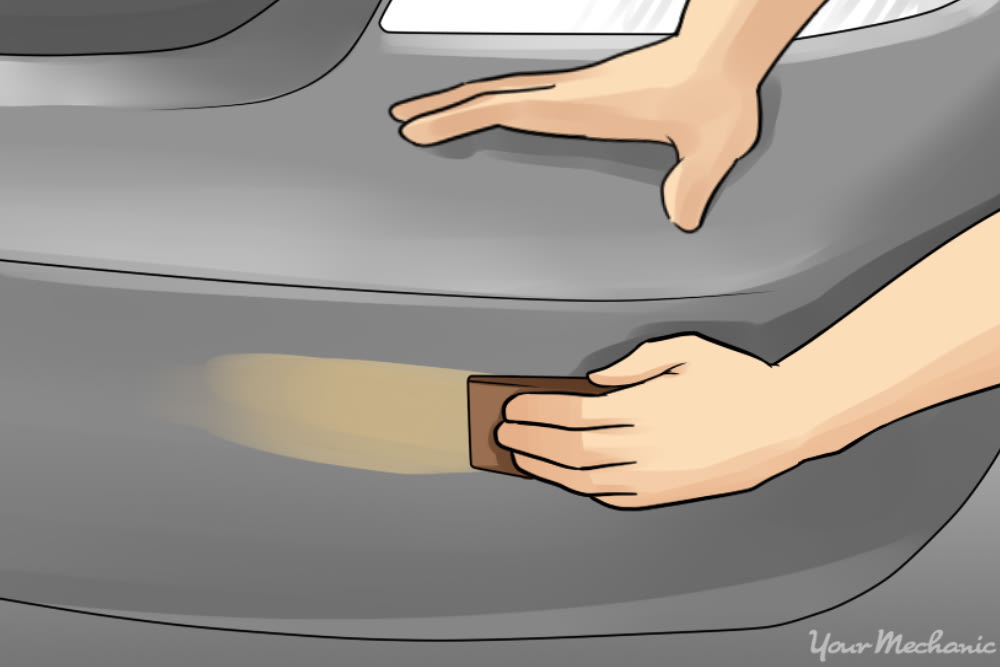
Permit it dry co-ordinate to the repair kit manufacturer's instructions.
Step 18: Remove the tape. Start peeling off the tape and remove information technology from the bumper.

Step 19: Sand the surface. Sand with fourscore grit sandpaper, feeling the surface equally you lot sand, to see how the repair is coming forth. Every bit you sand information technology, the surface should gradually transition from rough to almost smooth.
Footstep twenty: Apply 180 dust sandpaper to prepare the repair area for priming. Sand until the repair surface area becomes fifty-fifty and very smooth.
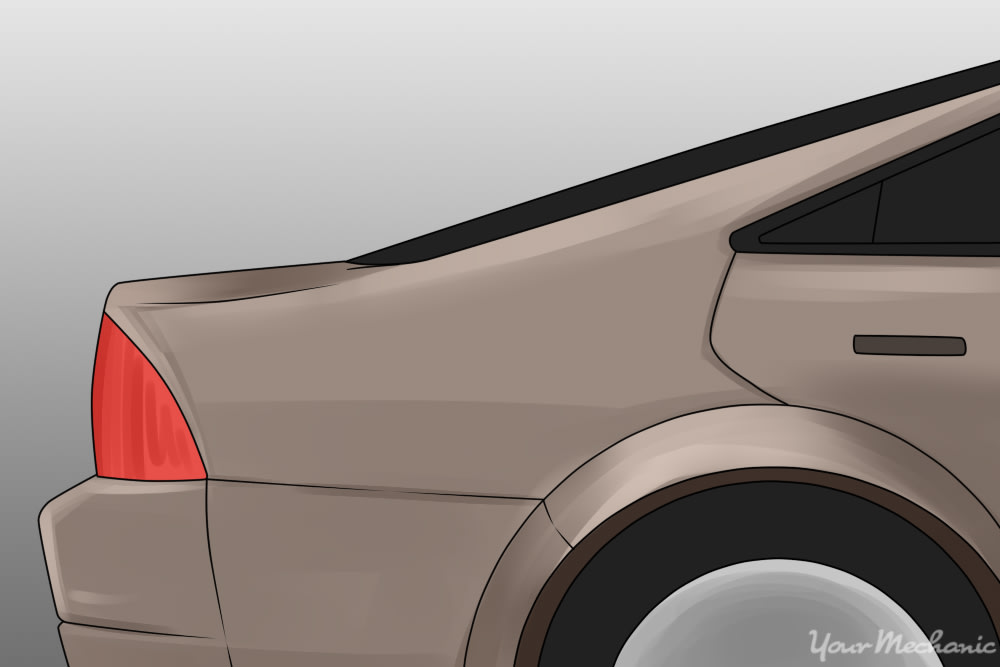
Step 21: Clean the area. Clean the repaired surface area with paint prep or 3M wax and grease remover.
Step 22: Prepare to apply primer. Using paper and masking record, encompass the surfaces surrounding the repaired area in training for primer.
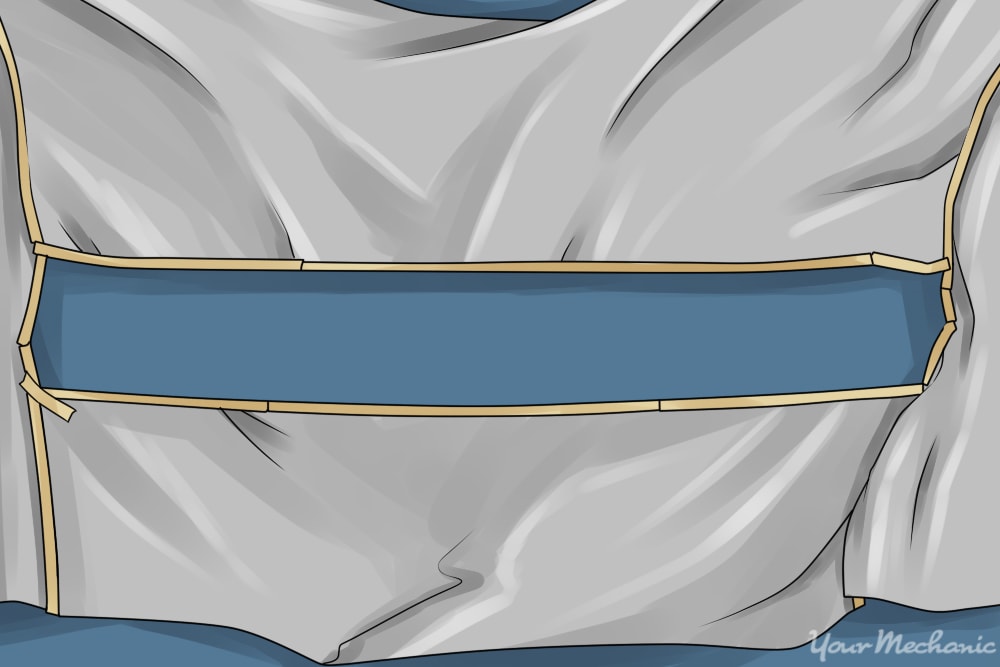
Footstep 23: Apply iii-v layers of primer. Allow sufficient time for the primer to dry earlier you apply the next layer.
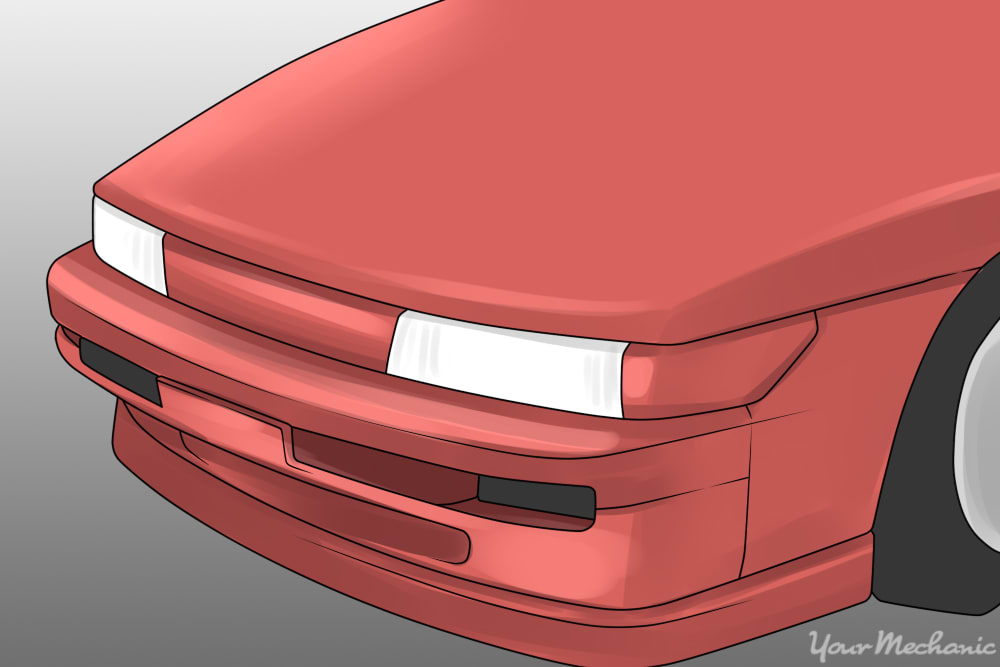
Now, the repair piece of work is consummate. All that your bumper at present needs is a pigment job!
If yous follow the instructions properly, no one will e'er exist able to tell that any harm occurred to your car'southward bumper. By performing this repair procedure on your own, you can cut off well-nigh ii-thirds of your body shop neb!
The statements expressed above are merely for informational purposes and should be independently verified. Please see our terms of service for more details

Source: https://www.yourmechanic.com/article/how-to-repair-an-auto-bumper
Posted by: darlinghicen1943.blogspot.com
0 Response to "How To Repair A 2000 Zr 600 Rear Bumper"
Post a Comment